Cat breeds / Ragdoll
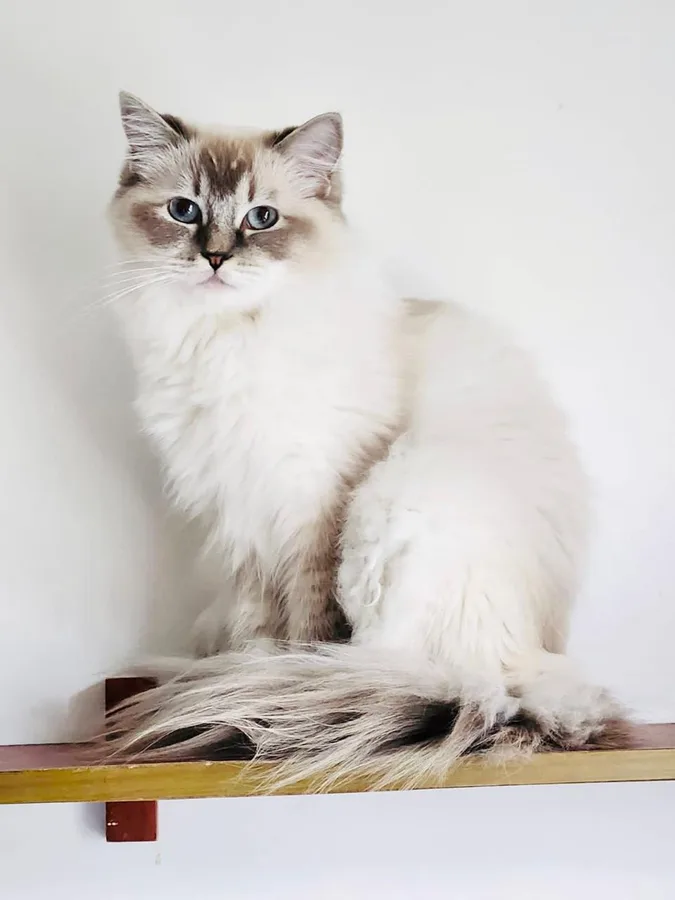
Photo: Cgomez766 · CC0 · Wikimedia Commons
Cat breed
Ragdoll
Ragdolls are known for a relaxed, affectionate manner. Many enjoy being held and will follow their people from room to room, often going limp when picked up, which gave the breed its name. They tend to be patient with children and get along well with other cats and calm dogs when introduced slowly.
Day to day, a Ragdoll needs regular brushing, a safe indoor environment or supervised outdoor time, and plenty of interaction. They are not especially high energy, but they do like daily play with wand toys and puzzle feeders. Plan on company for much of the day, since they tend to dislike being left alone for long stretches.
Good for: Families, quiet homes, and owners who want a cuddly companion
| Origin | United States |
Living with a Ragdoll
Exercise
Daily play sessions of 10 to 15 minutes with wand toys or chase games are usually enough. Indoor climbing structures and puzzle feeders help keep them active.
Grooming
Their semi-long coat has little undercoat and mats less than many long-haired breeds. Brushing two or three times a week keeps shedding manageable, with more during seasonal changes.
Health
Ragdolls can be prone to hypertrophic cardiomyopathy, a heart condition, and some lines may have kidney or bladder issues. Ask your vet about heart screening and recommended checkups.
Questions owners ask
Do Ragdolls shed a lot?
They shed moderately. Their coat has little undercoat, so it tends to be less messy than dense-coated breeds. Weekly brushing, more often in spring and fall, helps.
Can Ragdolls live happily in apartments?
Yes, many do well in apartments as long as they get daily play and attention. Vertical space and window perches help them stay engaged indoors.
Are Ragdolls good with kids?
Many are patient and tolerant with children who handle them gently. Supervision is still wise, since any cat can scratch if overstimulated.
Good picks for a Ragdoll