Dog breeds / Basenji
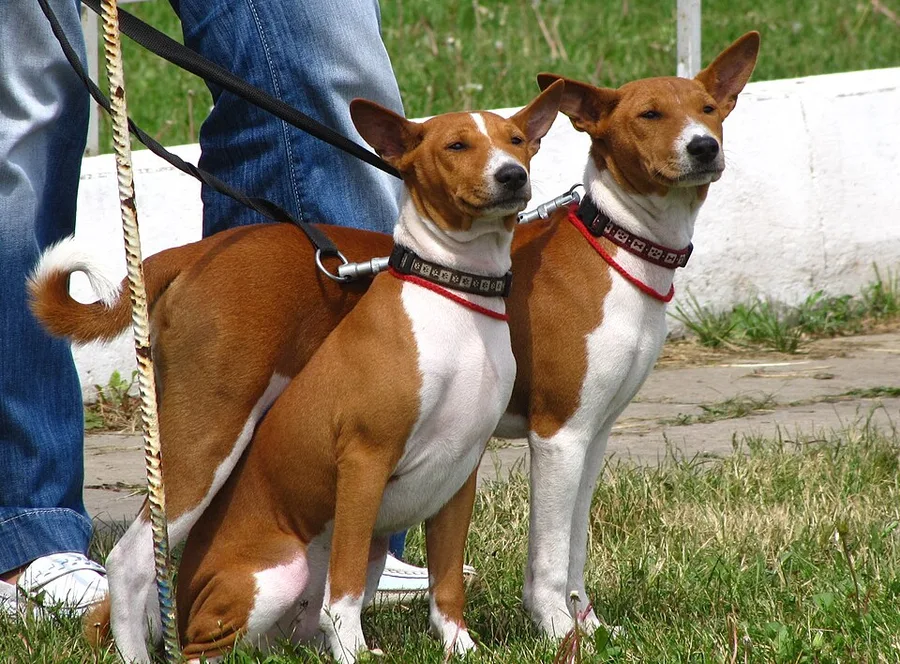
Photo: Novoklimov · CC0 · Wikimedia Commons
Dog breed
Basenji
The Basenji is an independent, alert dog with a cat-like habit of grooming itself and a strong sense of its own preferences. It is affectionate with its family but often reserved with strangers, and it tends to be aloof rather than eager to please. With children it does best when they are respectful and older, and with other pets it needs early, careful introductions, since its hunting instincts can make small animals irresistible. The breed is famously quiet, but it can yodel or make a sound closer to a scream when excited or frustrated.
Day to day, a Basenji needs a secure yard or leash walks, because it is quick to chase and may ignore recall once something interesting appears. It does best with daily walks, play sessions, and puzzle toys to keep its mind busy. It is also a clean dog that often housetrains easily, though consistent routine helps. Plan on regular social time and gentle, positive training methods.
Good for: Active owners, experienced dog people, homes with a secure yard
| Size | medium |
| Weight | 22–24 lb |
| Origin | Democratic Republic of the Congo |
Living with a Basenji
Exercise
Plan on at least an hour of activity daily, split between brisk walks and off-leash running in a secure area. Sprinting and games like fetch suit the breed well.
Grooming
The short, fine coat sheds lightly and needs only weekly brushing to remove loose hair. Baths are rarely needed, since the breed keeps itself quite clean.
Health
The Basenji is prone to Fanconi syndrome, a kidney condition, and progressive retinal atrophy, an eye disease. Ask your vet about screening and testing before you commit to a puppy.
Questions owners ask
Do Basenjis shed a lot?
They shed lightly and fairly evenly, with a bit more during seasonal changes. A weekly brushing usually keeps loose hair under control at home.
Can a Basenji live in an apartment?
It can, if it gets daily walks and mental stimulation. Its high prey drive and strong recall challenges mean a fenced yard or secure outdoor space helps a lot.
Do Basenjis bark a lot?
They are known for being quiet and rarely bark. Instead they may yodel or make a loud noise when excited, so owners should expect some vocal moments.
Good picks for a Basenji