Dog breeds / Black Norwegian Elkhound
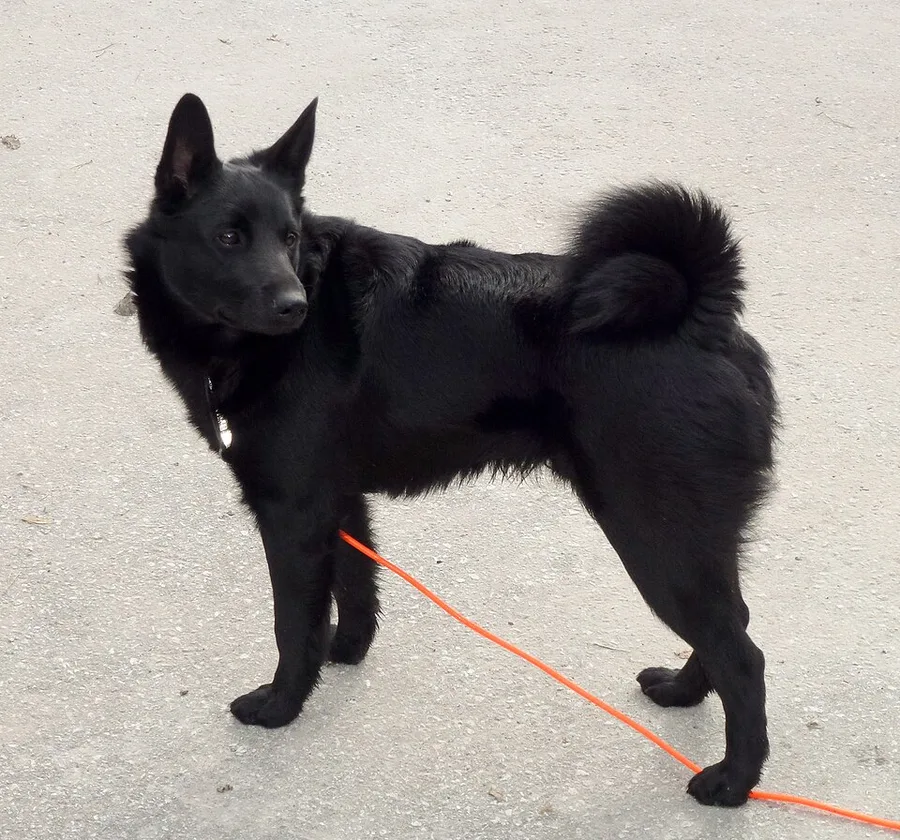
Photo: Rvenes · CC BY-SA 3.0 · Wikimedia Commons
Dog breed
Black Norwegian Elkhound
The Norwegian Elkhound is a confident, alert, and loyal companion bred to hunt elk and guard the home. They are affectionate with their families and usually good with respectful children, though their hunting instincts can make them chase cats or small animals. They tend to be vocal, often barking to announce visitors or strangers, and they can be stubborn during training, so patience and consistent rewards work better than harshness.
Day to day, an Elkhound needs regular walks, a secure yard or fenced space, and time with people, as they do not do well left alone for long stretches. They enjoy scent games, hikes, and problem-solving. Their dense double coat needs weekly brushing, with heavier attention during seasonal sheds.
Good for: Active families, owners with a yard and time
| Size | medium |
| Height | 17–19 in |
| Exercise | about 60 min a day |
| Shedding | heavy |
| Origin | Norway |
Elkhounds are independent and vocal, so expect to invest in consistent training and daily exercise before choosing one.
Living with a Black Norwegian Elkhound
Exercise
Plan on at least an hour of daily activity, split between brisk walks and off-leash running in a safe area. Hiking and scent work suit them well.
Grooming
The thick double coat sheds moderately year-round and heavily twice a year. Brush several times a week and more during shedding season; bathe only as needed.
Health
The breed is prone to hip dysplasia and certain eye conditions, and can be prone to obesity if activity drops. Ask your vet about screening and a preventive care plan.
- Hip dysplasia
- Progressive retinal atrophy
- Obesity
Known tendencies, not a diagnosis: ask your vet about this breed.
The numbers for a Black Norwegian Elkhound
Feeding, adult
2.5–3.25 cups a day
About 979 kcal, roughly 18 lb of dry food a month at 26–53 lb (typical for the size). Start here and adjust to the bag and your vet. Portion calculator →
What a year costs
$1,800–$3,100
Food about $720, plus routine vet care, parasite preventives and gear. US averages; insurance and emergencies on top.
Weather
Watch above 65°F, stop at 78°F
Coat or short walks below 10°F. A thick double coat shrugs off cold but holds heat: shade, water and shorter walks once it is warm.
Where a Black Norwegian Elkhound is comfortable
Easy most of the year: Alaska, Maine, Washington.
Summer needs care (early walks, shade, AC): Alabama, Arizona, Arkansas, California, Colorado, Connecticut, Delaware, Florida, Georgia, Hawaii, Idaho, Illinois, Indiana, Iowa, Kansas, Kentucky, Louisiana, Maryland, Massachusetts, Michigan, Minnesota, Mississippi, Missouri, Montana, Nebraska, Nevada, New Hampshire, New Jersey, New Mexico, New York, North Carolina, Ohio, Oklahoma, Oregon, Pennsylvania, Rhode Island, South Carolina, South Dakota, Tennessee, Texas, Utah, Vermont, Virginia, Washington, DC, West Virginia, Wisconsin, Wyoming.
Both seasons need care: North Dakota.
From typical July highs and January lows by state and this breed's heat and cold limits. Indoor life changes everything; this is about walks and time outside.
Questions owners ask
Do Norwegian Elkhounds shed a lot?
Yes. They have a dense double coat that sheds year-round and blows heavily in spring and fall. Regular brushing keeps shedding manageable.
Can an Elkhound live in an apartment?
It is possible if they get long daily walks and mental stimulation. Their barking and high energy make a house with a yard a better fit.
Do Elkhounds bark a lot?
They are alert and can be vocal, especially at strangers or noises. Early training and enough exercise help reduce excessive barking.
Good picks for a Black Norwegian Elkhound
 Made in the USA
 Made in the USA
 Made in the USA

 Made in the USA